This text accompanies the original seven-page booklet by Mathys Besserer and Jirka Gadas, students at the European School of Physiotherapy (ESP). The illustrated pages above contain the photographs, diagrams and full reference lists.
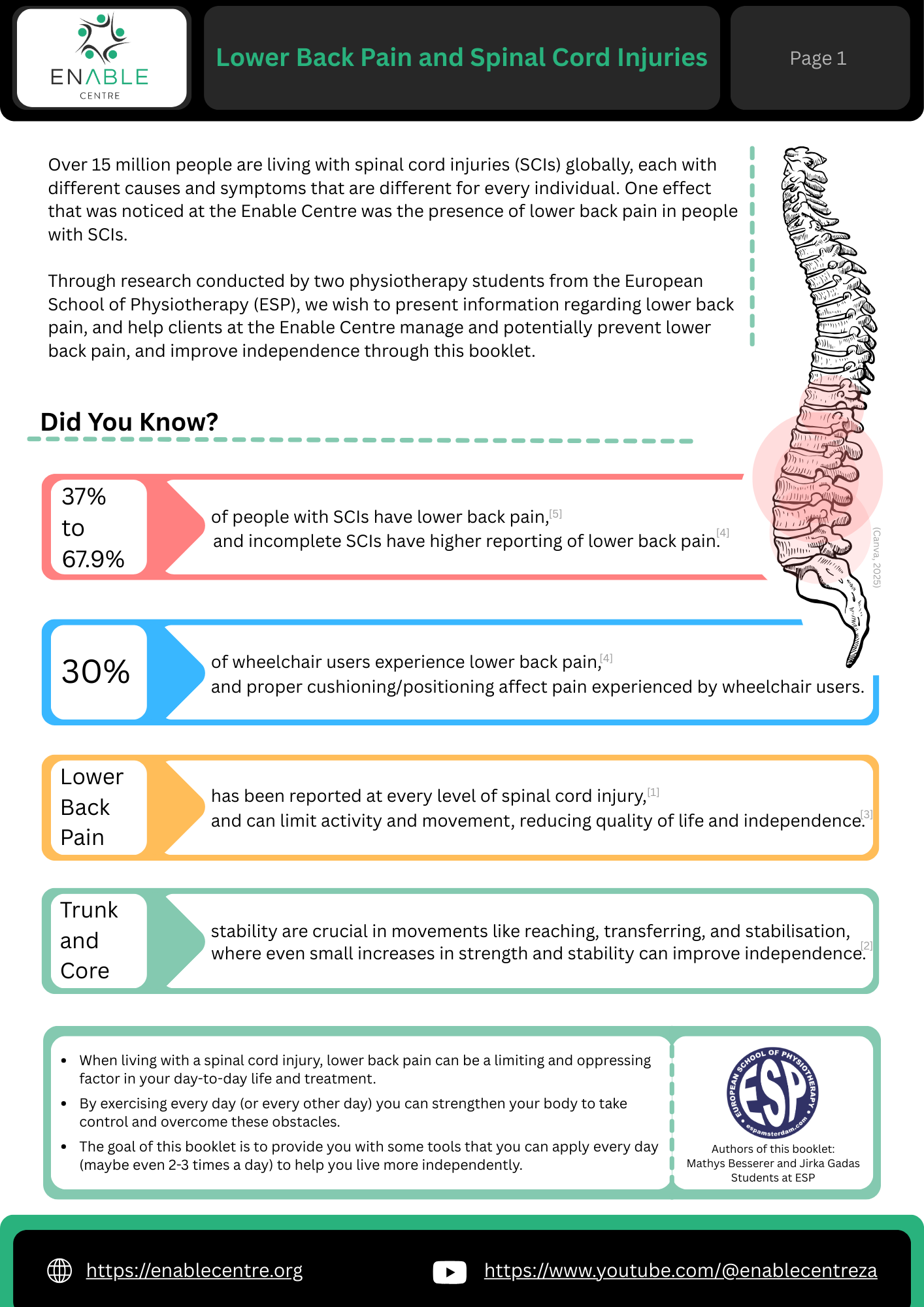
Over 15 million people are living with spinal cord injuries (SCIs) globally, each with different causes and symptoms that are different for every individual. One effect that was noticed at the Enable Centre was the presence of lower back pain in people with SCIs.
Through research conducted by two physiotherapy students from the European School of Physiotherapy (ESP), we wish to present information regarding lower back pain, and help clients at the Enable Centre manage and potentially prevent lower back pain, and improve independence through this booklet.
When living with a spinal cord injury, lower back pain can be a limiting and oppressing factor in your day-to-day life and treatment. By exercising every day (or every other day), you can strengthen your body to take control and overcome these obstacles. The goal of this booklet is to provide you with some tools that you can apply every day (maybe even 2–3 times a day) to help you live more independently.
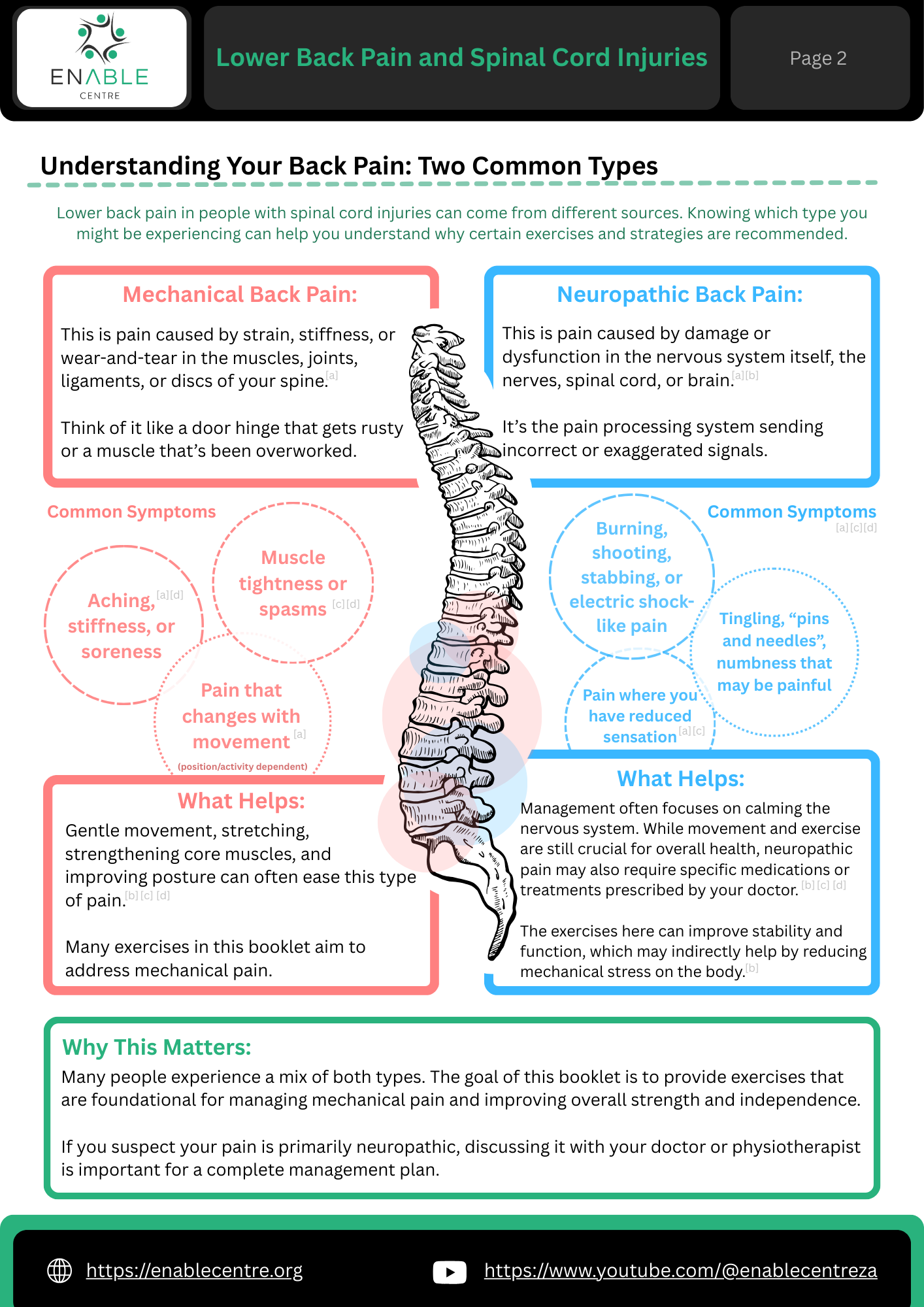
Lower back pain in people with spinal cord injuries can come from different sources. Knowing which type you might be experiencing can help you understand why certain exercises and strategies are recommended.
This is pain caused by strain, stiffness, or wear-and-tear in the muscles, joints, ligaments, or discs of your spine. Think of it like a door hinge that gets rusty or a muscle that’s been overworked.
Gentle movement, stretching, strengthening core muscles, and improving posture can often ease this type of pain. Many exercises in this booklet aim to address mechanical pain.
This pain is caused by damage or dysfunction in the nervous system itself, the nerves, spinal cord, or brain. It’s the pain processing system sending incorrect or exaggerated signals.
Management often focuses on calming the nervous system. While movement and exercise are still crucial for overall health, neuropathic pain may also require specific medications or treatments prescribed by your doctor. The exercises here can improve stability and function, which may indirectly help by reducing mechanical stress on the body.
Many people experience a mix of both types. The goal of this booklet is to provide exercises that are foundational for managing mechanical pain and improving overall strength and independence. If you suspect your pain is primarily neuropathic, discussing it with your doctor or physiotherapist is important for a complete management plan.
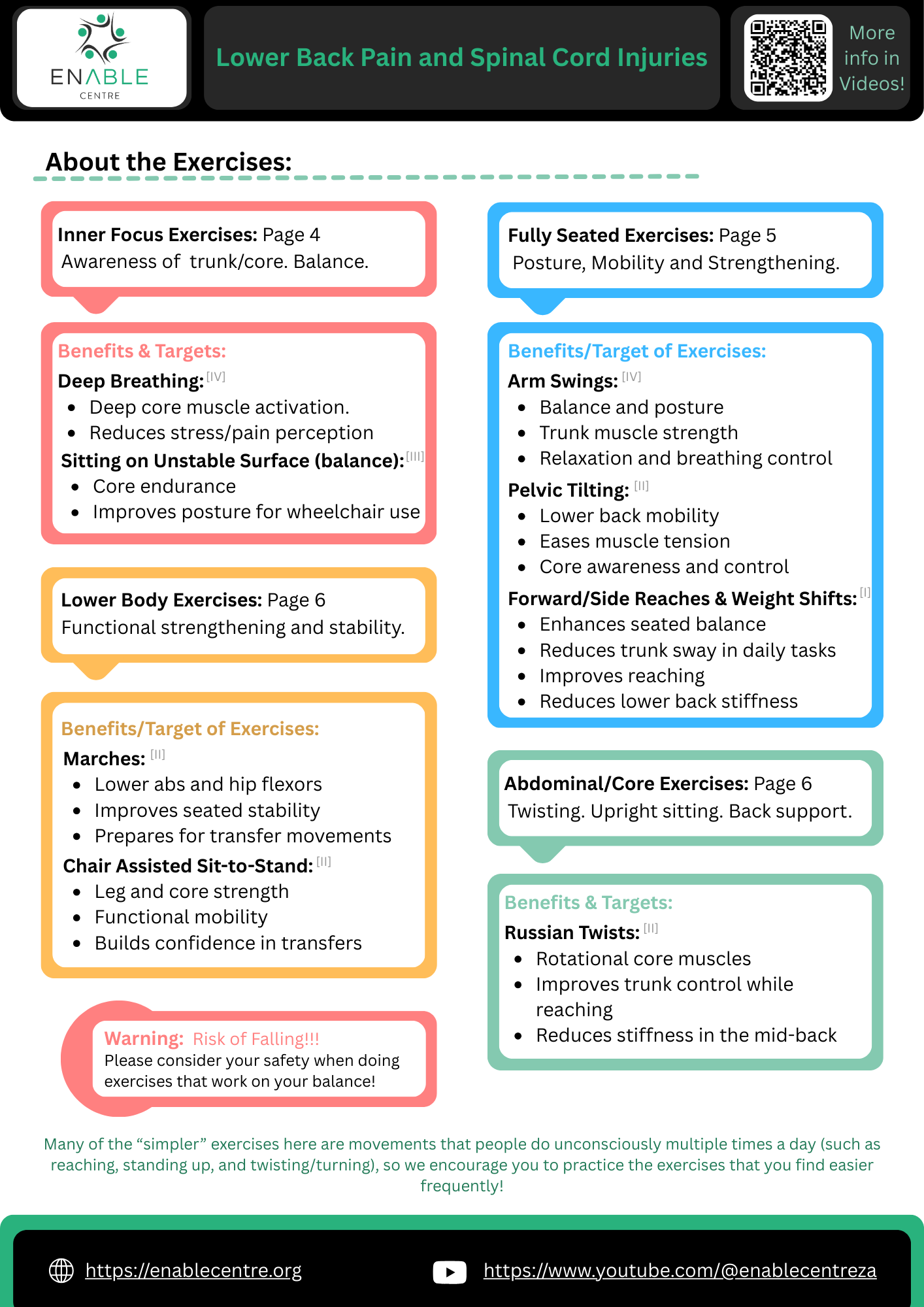
Warning: risk of falling. Please consider your safety when doing exercises that work on your balance. Many of the “simpler” exercises here are movements that people do unconsciously multiple times a day (such as reaching, standing up, and twisting/turning), so we encourage you to practice the exercises that you find easier frequently.
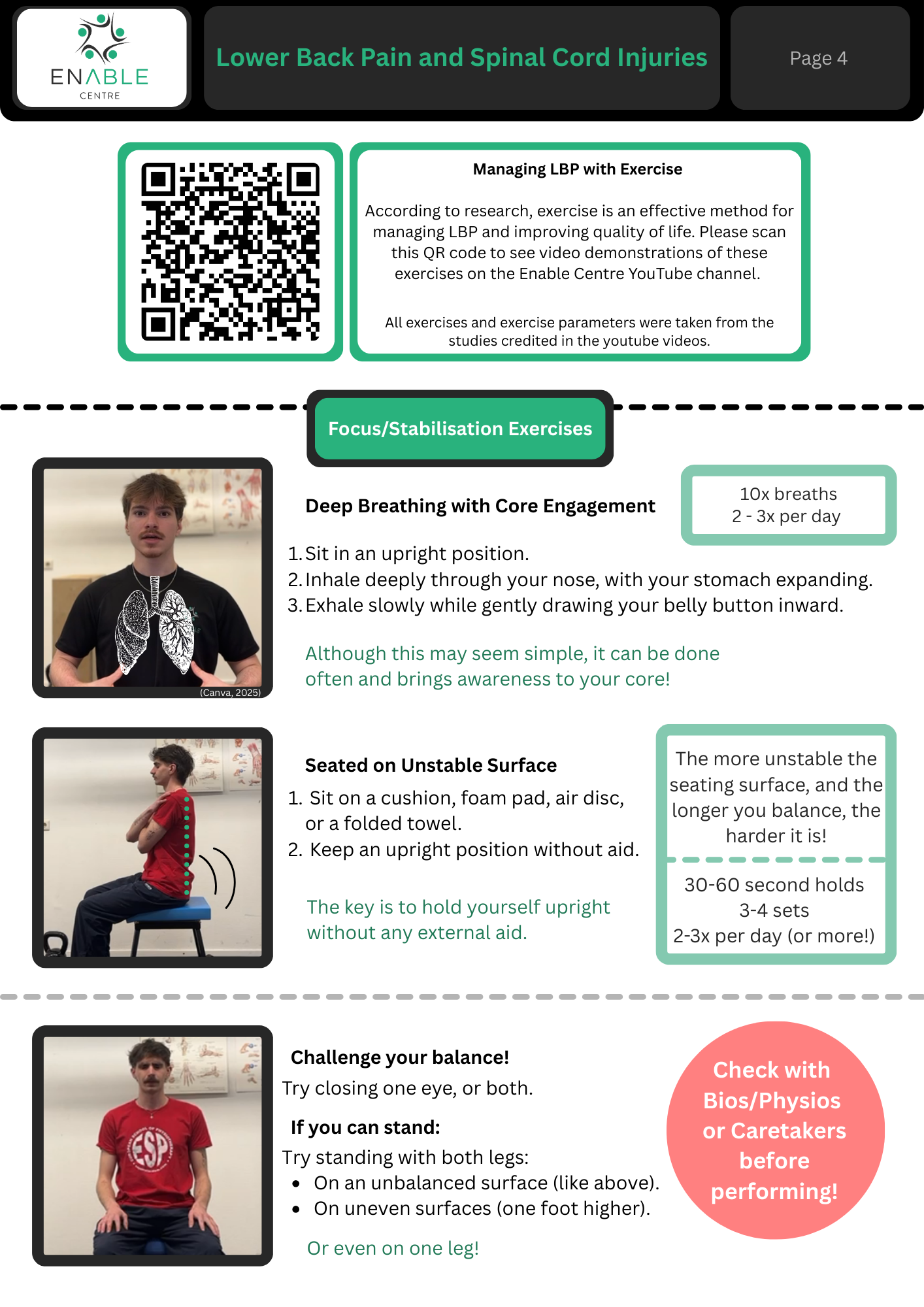
According to research, exercise is an effective method for managing lower back pain (LBP) and improving quality of life. Video demonstrations are on the Enable Centre YouTube channel. All exercises and exercise parameters were taken from the studies credited in the YouTube videos.
10 breaths, 2–3 times per day. Although this may seem simple, it can be done often and brings awareness to your core.
The key is to hold yourself upright without any external aid. The more unstable the seating surface, and the longer you balance, the harder it is. 30–60 second holds, 3–4 sets, 2–3 times per day (or more).
Challenge your balance: try closing one eye, or both. If you can stand, try standing with both legs on an unbalanced surface (like above), on uneven surfaces (one foot higher), or even on one leg. Check with biokineticists/physiotherapists or caretakers before performing.
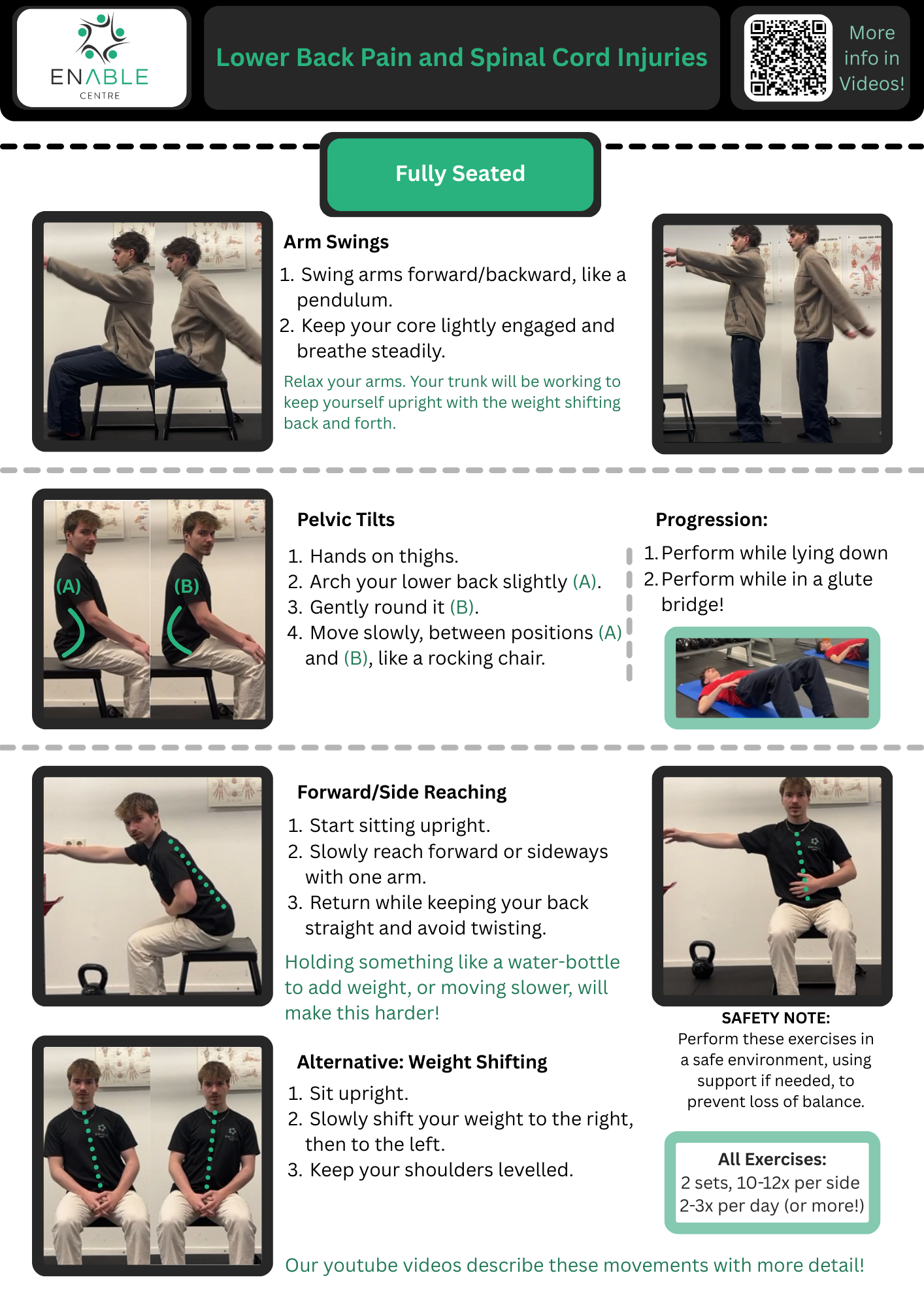
Relax your arms. Your trunk will be working to keep yourself upright with the weight shifting back and forth.
Progression: perform while lying down, or while in a glute bridge.
Holding something like a water bottle to add weight, or moving slower, will make this harder.
Safety note: perform these exercises in a safe environment, using support if needed, to prevent loss of balance. All exercises: 2 sets, 10–12 times per side, 2–3 times per day (or more). Our YouTube videos describe these movements with more detail.
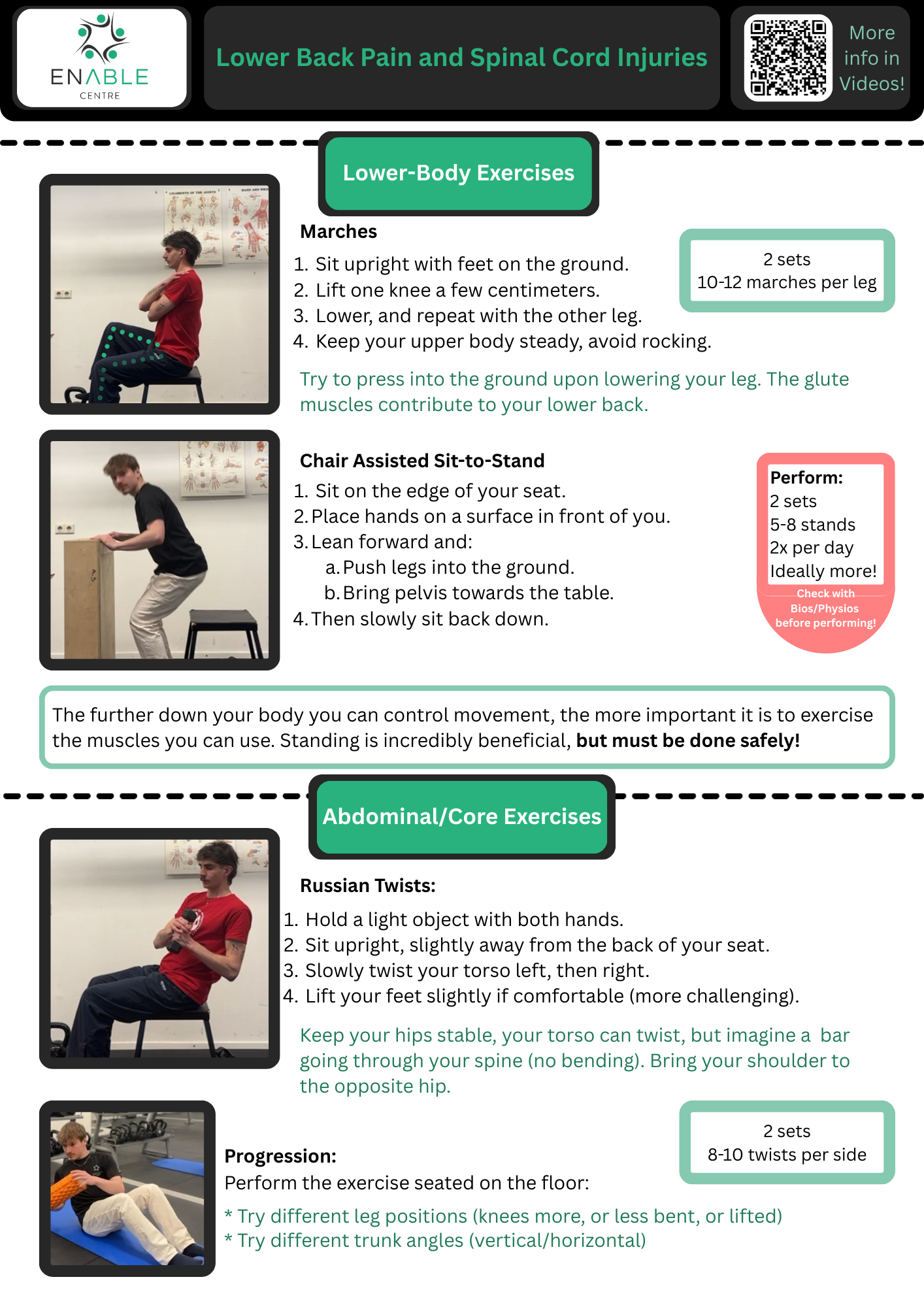
2 sets, 10–12 marches per leg. Try to press into the ground upon lowering your leg. The glute muscles contribute to your lower back.
Perform 2 sets, 5–8 stands, twice per day, ideally more. Check with biokineticists/physiotherapists before performing. The further down your body you can control movement, the more important it is to exercise the muscles you can use. Standing is incredibly beneficial, but must be done safely.
Keep your hips stable. Your torso can twist, but imagine a bar going through your spine (no bending). Bring your shoulder to the opposite hip. 2 sets, 8–10 twists per side.
Progression: perform the exercise seated on the floor. Try different leg positions (knees more or less bent, or lifted) and different trunk angles (vertical/horizontal).
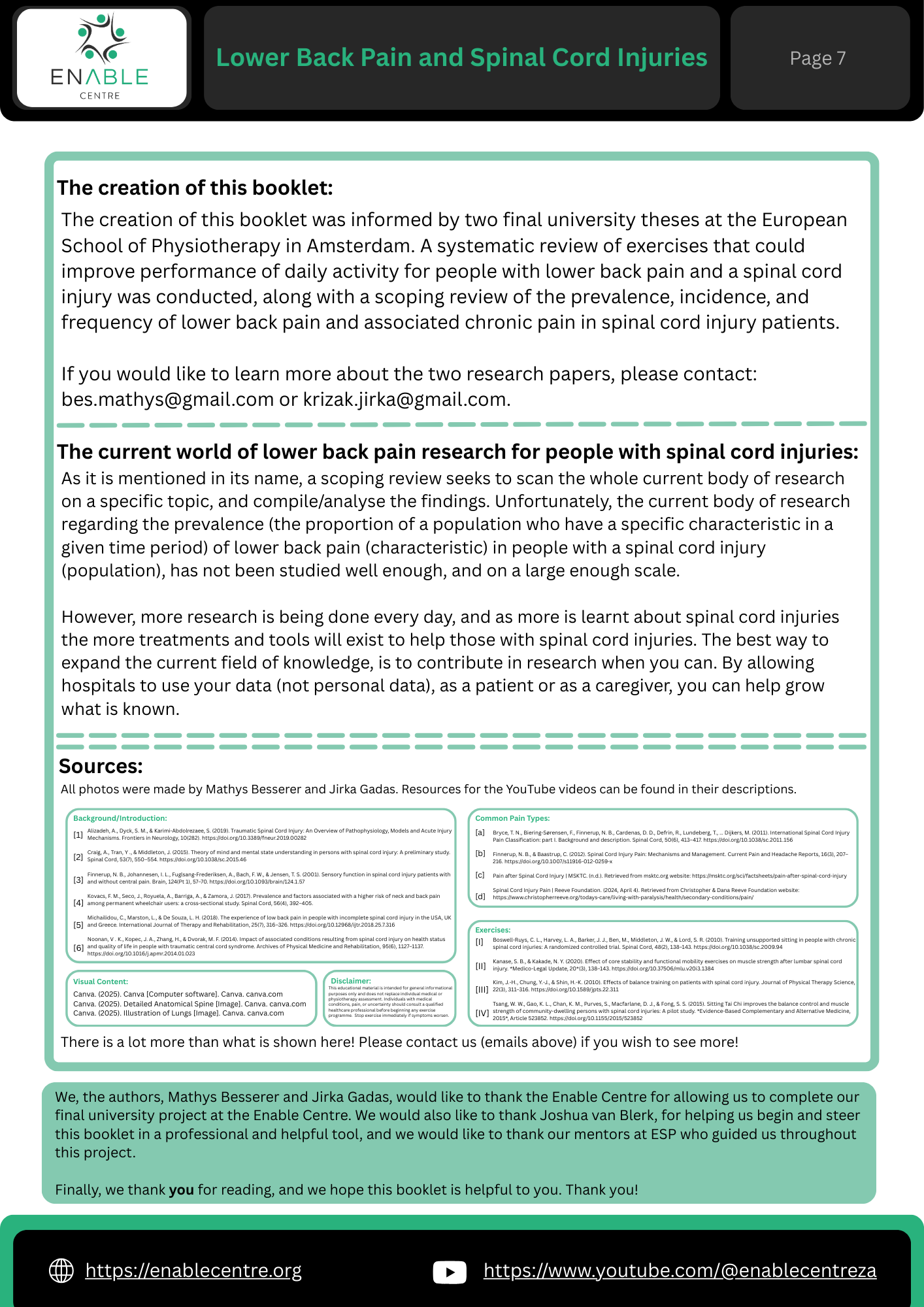
The creation of this booklet was informed by two final university theses at the European School of Physiotherapy in Amsterdam. A systematic review of exercises that could improve performance of daily activity for people with lower back pain and a spinal cord injury was conducted, along with a scoping review of the prevalence, incidence, and frequency of lower back pain and associated chronic pain in spinal cord injury patients.
To learn more about the two research papers, contact bes.mathys@gmail.com or krizak.jirka@gmail.com.
A scoping review seeks to scan the whole current body of research on a specific topic, and compile/analyse the findings. The current body of research regarding the prevalence of lower back pain in people with spinal cord injury has not been studied well enough, and on a large enough scale. More research is being done every day, and as more is learnt about spinal cord injuries, more treatments and tools will exist to help those with spinal cord injuries.
All photos were made by Mathys Besserer and Jirka Gadas. Resources for the YouTube videos can be found in their descriptions. Full citations for the booklet’s background, common pain types, exercise studies and visual content are on page 7 of the original booklet.
Original booklet disclaimer: This educational material is intended for general informational purposes only and does not replace individual medical or physiotherapy assessment. Individuals with medical conditions, pain, or uncertainty should consult a qualified healthcare professional before beginning any exercise programme. Stop exercise immediately if symptoms worsen.
The authors thank the Enable Centre for allowing them to complete their final university project, Joshua van Blerk for helping begin and steer the booklet, and their mentors at ESP for guiding them throughout the project.