

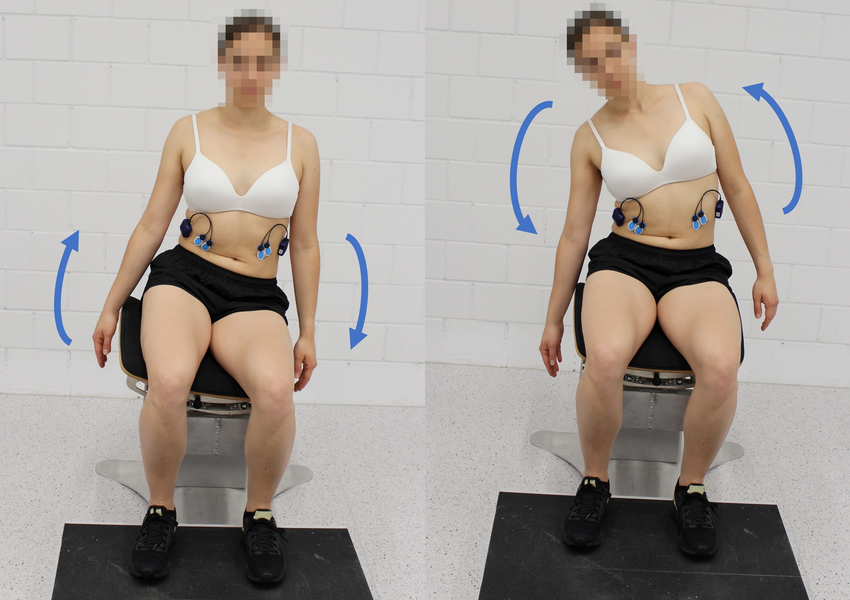
After a spinal cord injury (SCI), one of the first challenges many people face is difficulty sitting upright, balancing, or moving safely during everyday activities. While most people immediately think about leg or arm strength, and while these factors are extremely important a system that is often over looked is the rebuilding of trunk control.
What is trunk control, and why is it important?
Trunk control refers to the ability to maintain stability and move your torso while sitting, or while preforming tasks such as reaching, transferring, and other daily tasks. It relies on a coordinated system of muscles in the abdomen, back, and pelvis.
For people with SCI, especially at the thoracic or lumbar levels, these muscles can become weak or inactive due to disrupted nerve signals. Scientific studies consistently show that trunk stability is directly linked to functional independence. Research highlights that better trunk control can lead to:
• Safer transfers (e.g., bed ↔ wheelchair)
• Improved reaching ability
• Reduced shoulder overuse
• Better balance and fewer falls
• Improved wheelchair propulsion efficiency
• Greater participation in everyday life
A 2021 systematic review found that targeted trunk training improved sitting balance, reaching ability, and functional independence in people with SCI, often more than limb focused exercises alone. In short, the trunk is your foundation. When we strengthen it, everything else becomes more achievable.
Why does rebuilding trunk control help recovery?
Trunk control supports something called anticipatory postural adjustments, the small stabilizing contractions your body does automatically before you move. For example, reaching for a cup or shifting in your chair requires tiny core activations to prevent you from falling. After SCI, these automatic adjustments can be delayed or absent. But the exciting part is that the nervous system is adaptable, and task-specific training can help restore these pathways.
In conclusion:
Rebuilding trunk control after a spinal cord injury is more than a strength goal, it is a foundation for independence, safety, and quality of life. The evidence is clear: when the trunk is stable, people are able to move with more confidence, perform daily activities with greater ease, and participate more fully in their environments.
With the right guidance, the right exercises, and a supportive rehabilitation team, individuals with SCI can regain vital postural control and unlock new levels of function. Progress may be gradual, but every small improvement in trunk stability creates ripple effects throughout the entire body. Strengthening the trunk is not just about sitting upright. It’s about opening the door to possibility, dignity, and independence.
By Samantha Chambers – Biokineticist