

One of the biggest questions we see at the Enable Centre after a spinal cord injury (SCI) is: “Will I walk again?”
For patients, families, and rehabilitation teams, this can be incredibly difficult to predict in the early days after injury. A new study published in Archives of Physical Medicine and Rehabilitation has found that something surprisingly simple may help provide answers — testing sensation in the heels.
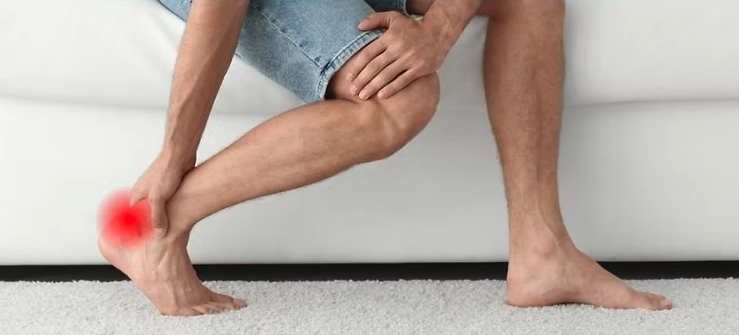
Researchers looked at more than 3,600 people with traumatic spinal cord injuries across multiple rehabilitation centres in the United States. They discovered that a simple pinprick test on the outer part of the heel (known as the S1 dermatome) could help predict whether someone would regain independent walking ability within a year.
The test itself is straightforward. A clinician lightly checks whether a person can feel a sharp sensation on the left and right sides of the heel. The results then fall into three broad groups:
- Normal feeling in both heels = a good chance of walking independently in the future
- Some feeling in at least one heel = a fair chance of walking recovery
- No feeling in either heel = a poorer outlook for independent walking
Why is this important? Traditionally, predicting walking recovery after SCI often involved lengthy neurological testing, complicated calculations, or focusing heavily on muscle strength. This new approach is appealing because it is quick, easy, and can even be performed at the bedside in the early stages after injury.
The science behind it is also interesting. The nerve pathways that carry pinprick sensation travel very close to the pathways responsible for movement in the spinal cord. If sensation is preserved in the heel, it may suggest that some of the important movement pathways are still intact.
Importantly, this tool is not a guarantee. Recovery after spinal cord injury is highly individual, and many factors influence outcomes, including age, rehabilitation intensity, overall health, and access to technology such as neuromodulation and advanced rehabilitation.
What this study does provide is something extremely valuable early after injury: clearer guidance. That can help clinicians tailor rehabilitation goals, help families prepare, and give patients a better understanding of the road ahead — all from a simple sensory test at the heel.
Written by: Dr. Robert Evans – Biokineticist