

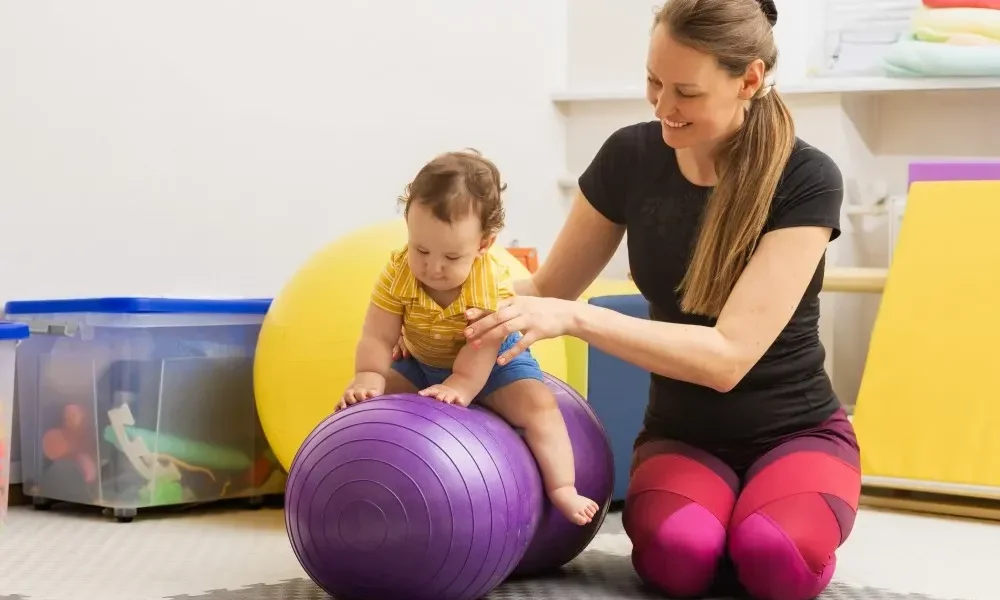
Movement is often viewed as a purely physical process. However, in early development, movement plays a critical role in shaping the brain.
The brain and body function as an integrated system. Every movement a child performs provides sensory input and experiences that support the formation and organisation of neural pathways. These pathways are essential for learning, regulation, and functional independence.
At the Enable Centre, movement-based interventions are used to support both neurological and functional development, particularly in children with developmental delays and neurological conditions.
Movement as a driver of development
Movement contributes to neuroplasticity – the brain’s ability to adapt and reorganise in response to experience. Through repeated and purposeful activity, neural pathways become more efficient and better integrated.
Movement also provides input to key systems, including the proprioceptive (body awareness), vestibular (balance and spatial orientation), and visual systems. The integration of these systems supports coordinated, controlled, and functional movement.
Key components of movement and their impact on development
Midline Crossing: Crossing the midline supports communication between the left and right sides of the brain and is important for coordinated use of both sides of the body during everyday tasks such as dressing, reaching, and object manipulation.
Hand-Eye Coordination: Hand-eye coordination supports visual-motor integration – the ability to use visual information to guide movement. This is essential for interacting with objects and navigating the environment effectively.
Motor Planning (Praxis): Motor planning refers to the brain’s ability to plan and sequence movement. It allows children to learn new skills, adapt movements, and carry out everyday tasks more independently.
Balance and Postural Control: Balance and postural control enable children to maintain stability during movement. These skills support safe walking, transitions between positions and participation in functional activities.
Core Stability: Core stability provides the foundation for movement. Adequate trunk control allows children to sit, stand and move with greater efficiency.
Why this is important
For children with conditions such as cerebral palsy, developmental coordination disorder, or global developmental delay, these foundational systems may not develop as expected. This can impact their ability to move safely, interact with their environment, and participate in everyday activities. Targeted, movement-based interventions can support improved functional outcomes over time.
Written by: Abigail Buys – Kinderkineticist